
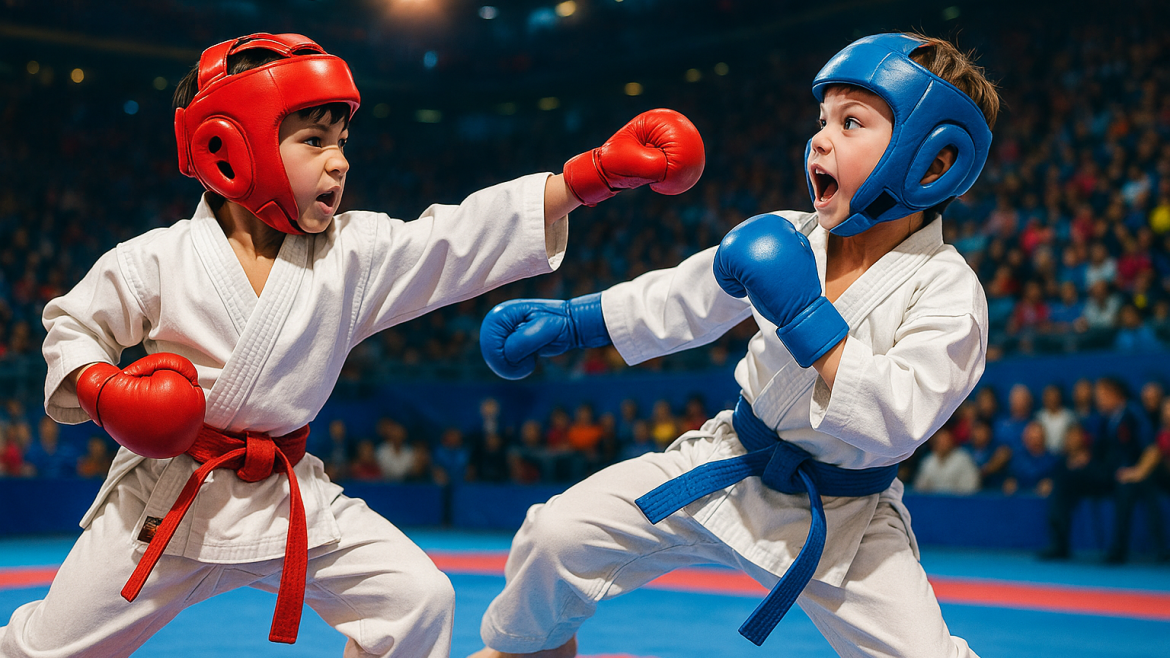
The arena is quiet… almost too quiet.
But it’s the kind of silence that speaks. It holds the tension, the focus, the breath of hundreds.
Suddenly—a drum booms.
Flags rise.
And in that heartbeat, the martial arts tournament begins.
🎌 Before the First Fight: The Sacred Setup
A traditional martial arts tournament doesn’t begin with chaos—it begins with discipline.
Days before the event, the dojo or sports hall is transformed. Mats are aligned perfectly. Flags representing different dojos, schools, or countries hang with pride. Judges’ tables are set with precision. There’s a place for everything, and everything is in its place—just like in martial arts.
Every participant is registered, their names echoing through the announcement booth. Brackets are formed. The arena isn’t just ready for battle—it’s dressed for honor.
🙏 The Grand Opening Ceremony
Before anyone throws a punch, the Opening Ceremony begins.
All participants line up in their uniforms—white, clean, crisp. Belts in black, brown, green, yellow—every color tells a story. Some are nervous, some focused like stone. But all stand in silence as the chief guest or master steps forward.
There’s a bow to the masters.
A bow to the referees.
And most importantly, a bow to each other.
Then, maybe a traditional demonstration—like a master performing a powerful kata, or a group showing a synchronized form with loud, thunderous kiais that shake the floor. Sometimes, a torch or symbolic lamp is lit—to mark the spirit of sportsmanship and courage.
That’s when the magic begins.
🥊 Let the Battles Begin: The Fight Process
The tournament now enters the action phase. Here’s how it flows:
🗂️ Fight Categories Are Announced:
Participants are called based on:
Age group
Belt level
Category (Kata or Kumite)
The fighters report to the staging area. You can feel their energy—the stretching, the breathing, the quiet talk to self. Their name is called. They step up.
👊 Kata Rounds:
In kata, it’s all about form, technique, and expression of style. The participant performs a pre-set sequence of movements. No opponent—just them, their breath, and the imaginary battle they’re fighting in their mind.
Judges hold up scoreboards. Cheers follow. Precision is celebrated.
⚔️ Kumite Rounds:
This is sparring—real-time combat.
Each match begins with a bow, a salute, and then… explosion.
Punches, kicks, blocks, counters—fast, controlled, but fierce. Every point scored is acknowledged by the referee with a loud call and hand signal. The crowd watches every second with held breath.
But no matter how fierce the fight—discipline rules all.
No arrogance. No disrespect. Fighters bow at the end, win or lose.
🏆 The Climactic Finals and Prize Distribution
As the day progresses, the best of the best rise through the rounds. The finals are intense—top fighters putting everything on the line.
Then comes the award ceremony.
Medals are given.
Trophies are lifted.
Certificates are handed out with pride.
The audience claps, not just for winners, but for effort, for spirit, for every warrior who stepped on that mat.
Sometimes, special awards are given too—Best Fighter, Best Technique, Best Spirit of Martial Arts.
🌇 And Then, the Ending Bow
As the day ends, all participants gather once more.
They bow one final time. To each other. To the judges. To the martial art itself.
The mats are cleared. The arena slowly empties.
But something remains in the air:
The echo of courage.
The silence of respect.
The soul of martial arts.
✨ Final Words:
A traditional martial arts tournament isn’t just a series of fights.
It’s a journey. A celebration. A place where warriors—young and old—come not just to win, but to honor the art.
From the first bow to the last cheer, it’s not about being better than someone else…
It’s about being better than who you were yesterday.

